Seymour II Wound Care Model
Product Description
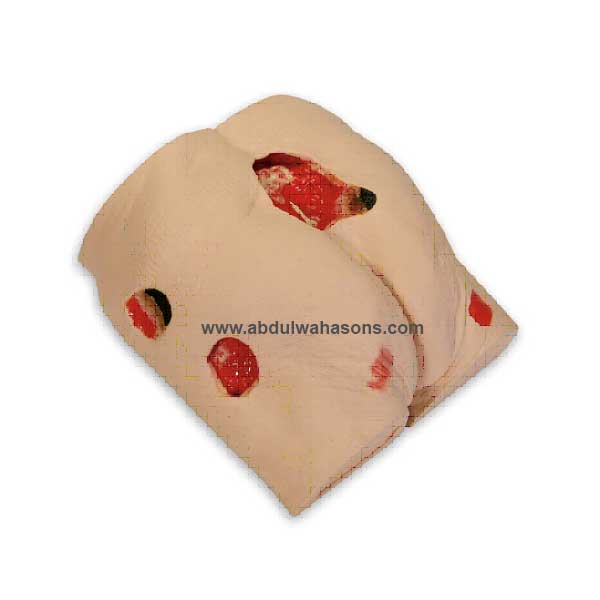
Made with a flexible, life-like material that permits the application and easy removal of dressings, without leaving an adhesive residue. Model is molded from an actual 74-year-old patient so it looks and feels like the real thing. Displays the following pressure ulcers: Stage 1; Stage II; Stage III with undermining, tunneling, subcutaneous fat, and slough; Stage IV with exposed bones, undermining, tunneling, subcutaneous fat, eschar, and slough. Also shown are a suspected Deep Tissue Injury, unstageable full eschar/slough wound, and 5-1/2″ dehisced wound. The Stage III and Stage IV are positioned so that a “bridging” dressing for use with a vacuum assisted closure and negative pressure wound therapy devices can be demonstrated and practiced. You are able to demonstrate and practice wound cleansing, classification, staging, and assessment, as well as the measurement of wound length, depth, undermining, and tunneling. The positioning of the wounds permits multiple dressings to be demonstrated at the same time. Model measures 12″ x 13-1/2″ x 6″.

Related products
-
Advanced Venipuncture and Injection Arm – Light
Product Description
This revolutionary training arm provides complete venous access for IV therapy and phlebotomy, plus sites for intramuscular and intradermal injections. An extensive 8-line vascular system allows students to practice venipuncture at all primary and secondary locations, including starting IVs and introducing Over the Needle IV Catheters. The venous system simplifies setup with only one external fluid bag supplying artificial blood to all veins simultaneously. The dorsal surface of the hand includes injectable metacarpal, digital, and thumb veins. The antecubital fossa includes the median cephalic, median basilic, and median cubital veins. Venipuncture can also be performed along the basilic, cephalic, accessory cephalic, and median antebrachial veins. Intramuscular injections may be performed in the deltoid muscle and intradermal injection sites are located in the upper arm. Intramuscular injections into the deltoid muscle are enhanced by the soft, lifelike skin and by the natural bony landmarks in the region. Intradermal injections using distilled water will create characteristic skin welts at designated sites on the upper arm. The realism of the Life/form® Advanced Venipuncture and Injection Arm is truly amazing. The soft, flexible fingers are molded separately with extreme attention paid to every detail – right down to the fingerprints! Flexion of the wrist helps students develop manipulation skills. The replaceable skin rolls as the veins are palpated, and a discernable “pop” is felt when entering the veins. The Life/form® molding process reproduces the fine details of the skin to make the arm look and feel alive. Valves in the veins can be seen and palpated on the skin surface. Simulated veins and skin are completely replaceable to keep this training arm looking and working like new. Under normal use, hundreds of injections may be performed before the veins or skin need to be replaced. Complete replacement kits are available and easy to use. To extend the life of the veins, an aerosol sealant is available to seal punctures and prevent leakage.
Complete Venous Access:
• Basilic V.
• Cephalic V.
• Digital V.
• Dorsal Metacarpal V.
• Median Basilic V.
• Accessory Cephalic V.
• Extensive Venipuncture System
• Flexible Fingers and Wrist
• Intradermal Injections
• Intramuscular Injections
• Median Antebrachial V.
• Median Cephalic V.
• Median Cubital V.
• Replaceable Skin and Veins -
NG Tube & Trach Skills Simulator
Product Description
The Life/form® NG Tube & Trach Skills Simulator has been developed to aid with the instruction, training, and practice of vital tracheostomy skills and care for patients with respiratory conditions. The simulator is also designed for instruction of gastrointestinal care procedures through nasal and oral access. With a newly designed Life/form® head and torso, this simulator features realistic landmarks, trachea, esophagus, lungs, and stomach. For exceptional realism, methyl cellulose can be mixed with water to simulate mucous-like fluids of a real patient. Fluid can be added to the lungs and stomach for realistic tracheostomy care and suctioning. The simulator also allows for the practice of dressing changes and cuff inflation. Other realistic procedures include: NG tube care, including insertion, irrigation, and removal; gastric lavage and gavage; feeding tube insertion and removal with the ability to practice feeding; nasoenteric and esophageal tube care; oropharyngeal and nasopharyngeal care; and tracheostomy tube care Intubation using a laryngoscope blade and size 6.0 ET tube may also be practiced. The simulator is designed to use size 6 tracheostomy tubes (LF01170U) and a size 6 NG tube. Spray-pump lubricant, a packet of methyl cellulose, instruction manual, and hard carry case are included. The simulator does not include tracheostomy ET, or NG tube. 10″ D x 16″ W x 27 H.
-
SMART STAT Basic with iPad
Product Description
This affordable patient simulator takes ALS training into the students’ environment. Instructors can evaluate student knowledge, skill levels, and critical thinking abilities by utilizing the applications via the iPad®*. This simulator can function in the lab and in the field for ascertaining diagnostic ability. Student performance records can be transferred to a computer, and chronological scenario event logs can be printed. SMART STAT Basic has an on-board air compressor, includes a free app on the iTunes Store®* (SMART STAT), storage for students’ performances, spontaneous breathing, pulses, blood pressure, carotid and femoral pulses, normal and emergent heart and lung sounds, 12 pulse points synchronized with the heart, EKG interpretation and cardiac treatment, IV catheterization and infusion, tension pneumothorax treatment, chest tube insertion with simulated drainage, and advanced difficult airway maintenance. Comes with an iPad®*, USB cable, blood pressure cuff, hard carry case, shorts, and a supply of replacement parts.
Advanced Airway Management
• STAT Deluxe Airway Management Head
• Tongue edema
• Laryngospasm
• Cricothyrotomy
• Breakout teeth
• Designed for LT, ET, LMA, and Combitube
ECG
• 4-lead recognition of 17 rhythms
• Defibrillation and cardio conversion
• Variable rates
• Pacing
Emergent Lung Sounds (anterior and posterior)
Emergent Heart Sounds
BP Arm
• Independently vary systolic and diastolic pressures
• Korotkoff sound changes
• Vary the amplitude of the sound
Pulse Points
• 12 locations in pairs: carotid, femoral, popliteal, pedal (dorsal arch), radial, brachial (IV arm-antecubital, BP arm biceps pressure point)
• Distal pulses drop off under 70 mm Hg systolic
• Vary according to ECG rhythm
Bilateral Chest Decompression
• Right- or left-sided, partial or complete pneumothorax
• Audible air discharge upon proper catheterization; no repair necessary
Bilateral Chest Tube Insertion
• Auxiliary fluid bag allows for simulated discharge
• Practice maintenance
Virtual Capnography and Oximetry
Printable Chronological Student Session Reports & Scenarios
• Easy to establish
• Start up library includes samples
• Print out for convenience
Replacement Parts Included
• 10 neck skins
• 4 IM injection pads
• 6 pneumothorax pads
• 3 sets of teeth
• IV vein kit -
Auscultation Manikin with ECG Simulator
Product Description
Manikin has all the same features as the complete CRiSis™ Manikin (LF03953U with the addition of auscultation sites with heart and lung sounds, plus an ECG Simulator LF03670U). For auscultation training, the instructor selects from a menu of heart and lung conditions by wireless remote control. The manikin presents itself as a real patient without visible auscultation sites. The student must palpate to identify correct auscultation locations, and will hear different heart and lung sounds as the SmartScope™ is moved to different locations on the manikin. A diagnosis of the condition selected by the instructor can be made by comparing the variations in sounds occurring at different sites – just like a real patient! Lung sounds can be detected at five anterior and two midaxillary locations and students can practice auscultation at six anterior heart sites. The remote control does not have to be pointed directly at the manikin or SmartScope™ to operate. One remote control will operate multiple sets of SmartScopes™ and manikins simultaneously. Great for group instruction. Listen to the sounds by using either the single or dual user headpieces on SmartScope™ or by connecting to an amplified speaker (not included, see SB20146U). Range on the unit is up to 100 ft. of remote access. Adult CRiSis™ Auscultation Manikin includes Complete CRiSis™ Manikin with auscultation sites, one remote control with LCD display, one SmartScope™ with single- and dual-user headpieces, hard storage case, and ECG Simulator (LF03670U). Requires two “AA” and two “AAA” batteries (included).
Lung Conditions:
• Bronchial
• Bronchovesicular
• Cavernous
• Coarse Crackle
• Egophony
• Fine Crackle
• Friction Rub
• Infant
• Mono Wheeze
• Normal
• Normal Vesicular
• Pectoriloquy
• Pulmonary Edema
• Rhonchi
• Stridor
• WheezeHeart Conditions:
• Aortic Regurgitation
• Atrial Septal Defect
• Holosystolic
• Mid Systolic
• Mitral Stenosis
• Normal
• PDA
• Pulmonary Stenosis
• Systolic Click
• S3 and S4 Gallup
• VSD


Reviews
There are no reviews yet.